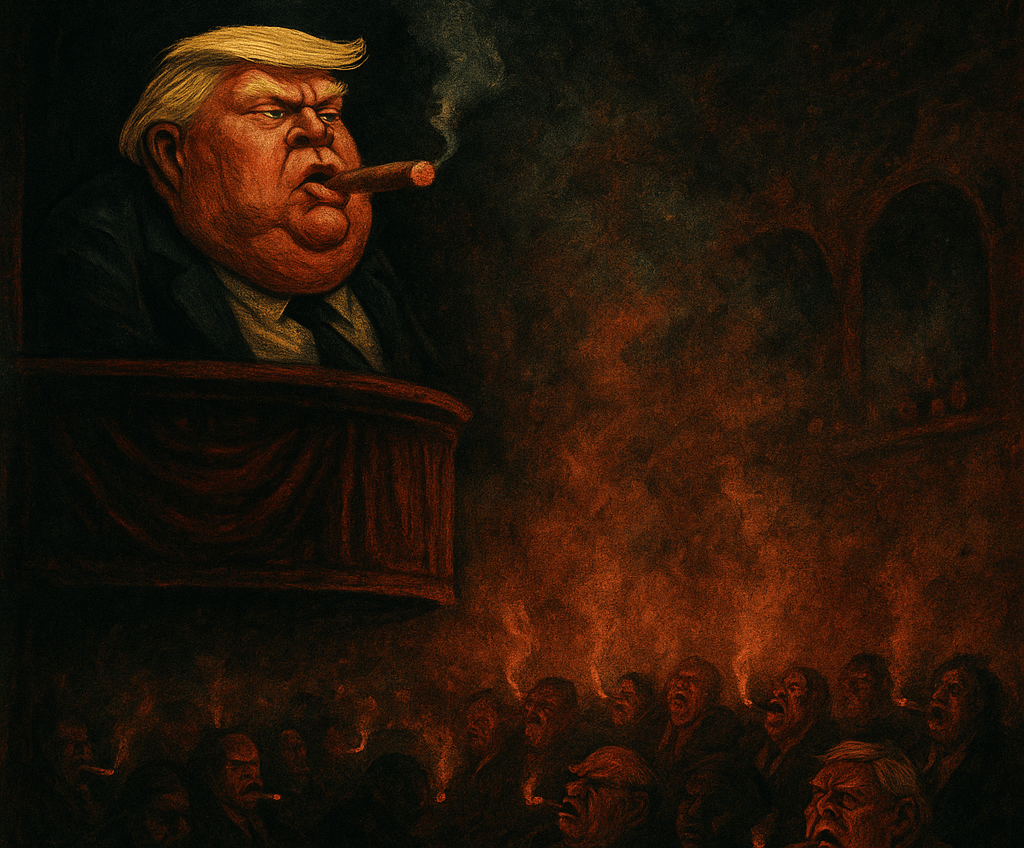
You are in a theater and a guy in the balcony lights a cigar. Naturally, many in the crowd protest, demanding he put it out. The man ignores them, blissfully puffing away. Soon, something strange begins to happen. Emboldened by his defiance, others in the crowd begin lighting up. Eventually, more than a third of the audience is smoking, and the room, now thick with noxious haze, becomes unbearable. You alert the theater staff only to find many of them joining in.
If asked, most couldn’t explain why they lit up. Some would say they saw the first man defy convention without consequence and felt free to indulge. Others would insist it has always been this way. Many would argue theaters were better when smoking was allowed, and that the cigar-smoking leader is simply making theaters great again. It seems they were looking for someone to strike the first match to justify their own guilty pleasure.
The theater is unlivable, but you can’t leave—you came with friends and family, many of whom are smoking along with the rest. You aren’t alone in your opinion, but the smoke is so pervasive it consumes the last of the air, suffocating not just the innocent, but also those who ignored the warnings and protests of the experts. The cigar-smoking man has long since slipped away, leaving only a theater of smoldering decay in his wake.
The air is gone, the show is over, now there’s nothing more to see.
 Mannino Acid