A Brief History
Born of an inauspicious and improbable origin story, rooted in the hopes of a community that loved baseball and believed firmly in the central thesis from Field of Dreams, that if you build it, they will come, the Tampa Bay Rays have spent the entirety of their short existence being overlooked, underestimated, and marginalized. The only place they have ever called home, the much-maligned but ambitious Tropicana Field, was never intended as an affront to the spirit of baseball but was built as an ambitious invitation to the sport. By the time the league got around to accepting that invitation, the dome was already standing, but the architectural sensibilities of Major League Baseball had shifted, leaving the Suncoast Dome painfully out of vogue before a single professional fastball could even be hurled beneath the cool shade of the dome.
When the Devil Rays finally sprang into existence, fielding a hodgepodge roster of unknown prospects, free-agent castaways, and just-past-their-prime elder statesmen, the appetite for professional baseball was strong, but allegiance to the franchise was far from assured. With no generational fandom to draw upon, the team had ahead of them the unenviable task of cultivating a grassroots following from the arid St. Petersburg sand. Their first 10 years of lackluster performance did little to aid in that effort. Add to this the notoriously transient nature of the Tampa Bay market, populated by transplants whose baseball loyalties were often pledged to ancient-by-comparison franchises, and the first generation of Rays fans faced a decidedly uphill battle.
Following a decade of futility and right on cue with dropping “Devil” from their name, the “little franchise that could” found its way not only to its first winning season but swung for the proverbial fences in securing its first American League pennant. As the winning continued for the next five seasons so too did the criticism mount over attendance, fueled by a myopic view of the Tampa Bay market and relentlessly unbalanced comparisons to other teams in our division, namely the Yankees and the Red Sox. Geographic isolation and relatively low fan density would continue to bedevil the Rays throughout the intervening years. Calls for the franchise to relocate, demands to demolish the Trop, and even the preposterous, ownership-backed proposal to split home games with Montreal only served to deepen the collective chip on the shoulder of an increasingly defiant fan base.
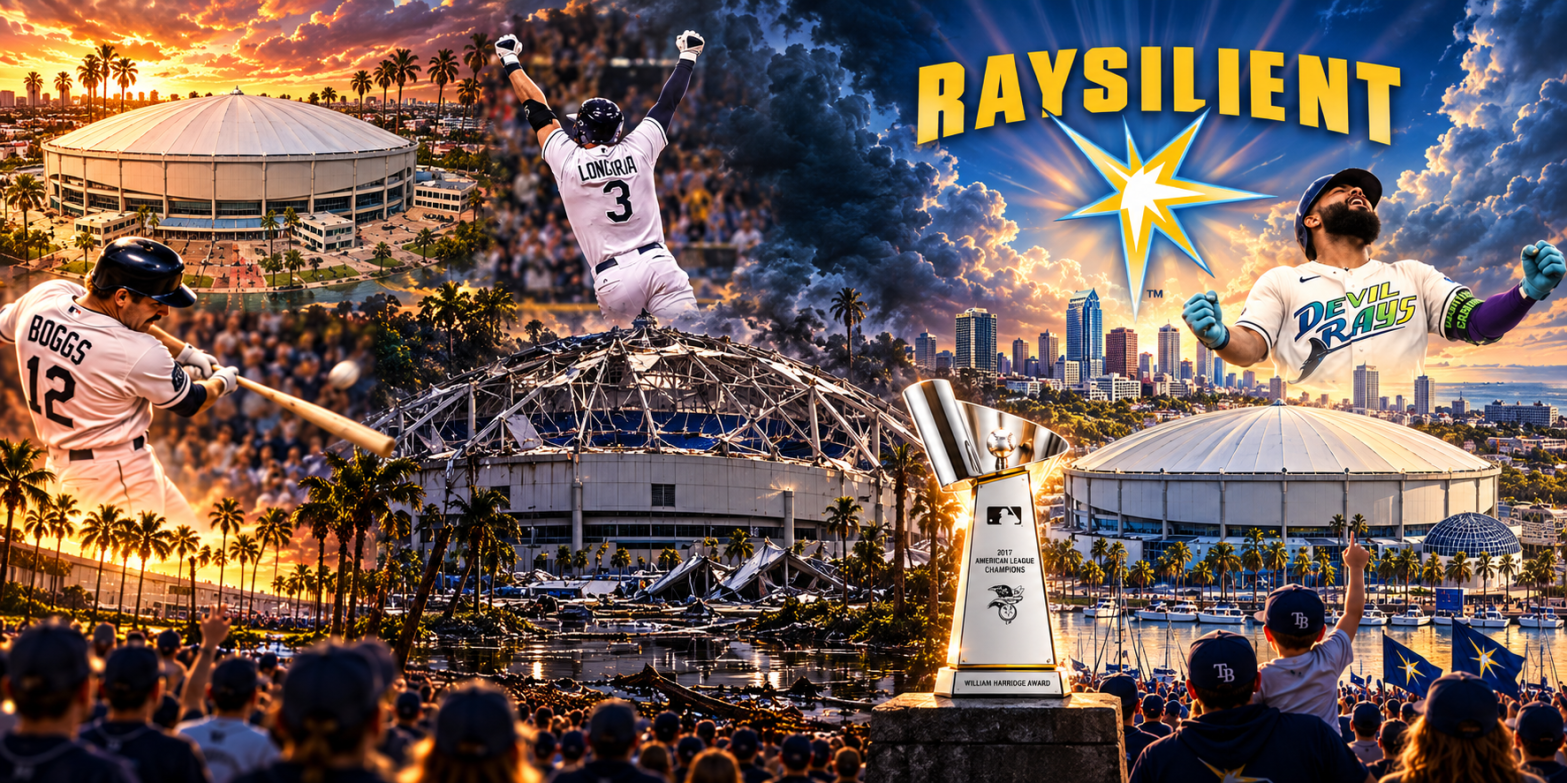
After several years of unremarkable baseball in the mid-2010s, the Rays found their way back into contention, mounting another six consecutive winning seasons, five of which culminated in playoff appearances, highlighted by capturing their second American League championship during the pandemic-abbreviated 2020 season. Just as the Rays appeared to be heading for a new ballpark only feet from the Trop, a hurricane tore the roof off the dome leaving the Rays temporarily homeless. The destruction, coupled with the subsequent collapse of the stadium deal, cast an ominous shadow over the team’s future. The impact this had on not only the team, but the community at large cannot be overstated, nor can its full emotional weight be felt by those outside of the Tampa Bay area. The damage was far more than financial. It was spiritual. It felt like the final blow in a long line of indignities that the team and its devoted fans had endured for decades. The gaping hole atop the Trop seemed to taunt us with the impending demise of not only the franchise but the dreams that had built it in the first place. We bore this pain together as a community, but rather than surrender to the seemingly inevitable, we rallied behind the franchise and defiantly rebuilt. The call to action had been sounded, and the team heard and responded.
From Boggs’ historic homer back in ’99 to the magic of Game 162 twelve years later, the Rays continue to find ways to grow their mythology, just as the inaugural generation of fans has begun bringing the next generation to the park. The growth of the franchise over the years echoes that of its fans and establishes a significant foundation for decades of inherited allegiance yet to come. Following the indignity and uncertainty of 2025, this year’s triumph packs an especially poignant punch. From having their home decimated to spending an entire season as exiles in the enemy’s camp, only to emerge with this improbable American League pennant, the Tampa Bay Rays are more than a story of resilience. They embody the quintessential underdog, a team every wayward baseball fan should be able to get behind.

